
Tuesday, March 12, 2013


Friday, March 01, 2013

Tuesday, February 26, 2013
New Yorker resident feminist responds to Oscar horror
She's a bit more strident than I would have been, but her catalog of the night's lowest and deepest curves is full.
http://www.newyorker.com/online/blogs/closeread/2013/02/seth-macfarlane-and-the-oscars-hostile-ugly-sexist-night.html

http://www.newyorker.com/online/blogs/closeread/2013/02/seth-macfarlane-and-the-oscars-hostile-ugly-sexist-night.html
Thursday, January 17, 2013
Embarrassment is the Key to Enlightenment: Tiny Furniture and the Composition of Meta-Mumblecore

Totally. We are annoyed by Lena because she's so successful. We are annoyed by her because she was born into that privileged, New York City cultural elite, a child of successful New York artists who has become even more famous than her parents and at a way younger age. And then there's that creepy, apocryphal line in the film when Dunham's actual mother, the artist Laurie Simmons, playing the main character's successful artist mother, says to Aura: "oh, you will be more successful than I am, really, believe me."
As Schrader so brilliantly suggests in his interview on the DVD extra, Tiny Furniture is appropriating the mumblecore genre. Our contemporary obsession with the minutia of self, write DIY as videos in which "me and my friends are gonna make a movie about me and my friends talking about me and my friends." Schrader suggests that Tiny Furniture is too representative of its genre and that this "too representative-ness" is what creates the hostility. He suggests that this movie about a young woman who only worries about herself and takes her clothes off, makes us want to slap her. Schrader assures us that he believes the film to be tightly scripted and well-written, which uses good storytelling. But then he claims that it's good filmmaking pretending to be "amateur" and that's where we differ. I don't think Tiny Furniture is pretending to be amateur at all. I think it's aspiring to be photographic and cinematic and metaphoric in the most foreign filmy type of way. The only false or ironic note I detect is when Aura claims she hates foreign films.
Which brings to me to the question: what is Tiny Furniture about? Is it the failure of composition to protect us from embarrassment? Is it the beauty of, the preciousness of the minute, the intimate, the horror/the necessity of the 'real,' the elusiveness of it. It is anamorphic, expressively photographic, landscapes of embarrassment, striving, jealousy. The fear of loss, of losing what you maybe don't yet even have. Dunham frames the innate ugliness, the selfish entitlement of the world in which she is a happy yet reluctant member. She questions what passes for success in the New York City these days, she questions the values of her world even as she expresses them in a glossy, shallow depth of field lushness. Schrader says that Dunham's emphasis on composition is a kind of artistic proof of her work, evidence of her structuring and originality.
Finally, Schrader asks if the film is a representative of Future Film or of a dying genre. "In many ways, (it is) an old fashioned film wearing these new raggedy clothes." I dunno, Paul, those clothes don't look so raggedy. 5D digital filmmaking is looking mighty fine in that indie NY Tribeca loft. If the film is representative of anything, I would say, it's the enduring power of French film, of European cinema, as much as Woody Allen, to inspire a young American woman of today to be her powerful, self-deprecating self.
Ultimately, I think Tiny Furniture is about getting all the mistakes out of the way. It is about being a loser, and what is lost is the kind of virginity that New York demands its citizens lose, even today, after all these gentrifying years later, all these years of wealth and power and slickness later, you still have to get fucked in order to live here. And, Dunham's character endures through all humiliation in order to finally get her tickling time in bed with her mother.
Lena on Nora Ephron:
http://www.newyorker.com/online/blogs/culture/2012/06/lena-dunham-remembers-nora-ephron.html
I love that Lena loves Nora. Nora Ephron, married to Carl Bernstein, wrote the novel and then directed her own film version of their bitter breakup and divorce. Nora and Lena talk about Woody Allen and the ways he influenced both of them in the DVD extras of the Criterion Collection's "Tiny Furniture."
Wednesday, October 24, 2012
Blue fixations

AND this:
Friday, July 06, 2012
1000 melting ice men

Saturday, June 30, 2012
Men Who Explain Things by Rebecca Solnit
Every woman knows what it's like to be patronized by a guy who won't let facts get in the way.
Saturday, March 17, 2012
5,000 Books Pour Out of a Building in Spain


Art and Truth.... Daisy, Apple and American Life
Mike Daisy, art and "the truth".... Another casualty of big business power guns shooting down the little guy to protect their image? Or is there something deeper about the way that fiction is more powerful than fact to inspire and change minds? I still think Daisy and TAL did a great thing by helping to bring this story into the public consciousness. I'm also interested in see/read his work about JT Leroy and Stephen Glass. Theater is all about the manipulation of experience to create affect.
How Mike Daisey's Zeal Got the Best of Him - The Daily Beast
And this from Lawrence Weschler on the fiction of non-fiction:
http://www.onthemedia.org/2010/dec/24/lawrence-weschler-on-the-fiction-of-non-fiction/
 |
| Mike Daisey is shown in a scene from his play "The Agony and The Ecstasy of Steve Jobs" at The Public Theater in New York., Courtesy Stan Barouh, The Public Theater via AP |
How Mike Daisey's Zeal Got the Best of Him - The Daily Beast
And this from Lawrence Weschler on the fiction of non-fiction:
http://www.onthemedia.org/2010/dec/24/lawrence-weschler-on-the-fiction-of-non-fiction/
Wednesday, February 08, 2012
Retrograde Gender performances in the house....
So, I've been thinking a lot about feminism lately, thanks to Young Jean Lee's "Untitled Feminist Show" but also because of that Gloria Steinem doc on HBO this month, and then there's the doc about Kathleen Hanna that my friend Sini is working on.... Maybe, also because I'm working on an experimental doc about dyke culture in the 90s for Michelle Tea's Valencia/The Movie(s) film compilation project... I'm really thinking about this feminism thing and the way that the politics of gender and gender identity have changed over the past few decades.
 First of all, I want to say that the fact that Young Jean Lee's show is called "Untitled Feminist Show" makes me want to rip into it. The very title is a provocation. Is the word "Feminism" something less than a title? Or does the very word "Feminist" render anything else inferior or irrelevant? What does it mean to be untitled and feminist?
I would like to suggest that the "Untitled Feminist Show" is just that - a kind of pandering to an uninformed idea of "feminism" with quotes around it. Does the fact that the five different female performers perform naked during the entire show make this show feminist? Or rather, does the show harken us back to a time in the not too distant past when high Art displayed unnamed naked female bodies for the titillation and benefit of its male gazing audience. Remind me, again, what is exactly feminist about naked female bodies on display for spectacle sake? Perhaps you might say, seeing the different body types and shapes and sizes, not to mention the actual physical toll that large breasts bouncing up and down might take on its bearers, allows us, the audience to elevate the humanity of the individual performers? Maybe.... I'm not convinced.
Certainly, in past decades, many female (and queer) performance artists and dancers have used the naked or nude body to celebrate the body and expose our dominant culture's fear or hatred of different kinds of sexuality and gender identity. And you could argue that Young Jean Lee's show does achieve that sort of provocation at times. I'm thinking in particular of the what for me was the show's real standout moment, Lady Rizzo's amazing and hilarious blow job mime where she points to different people in the audience and gives them virtual blowjobs....
But, aside from certain moments where the performers take the show by the balls and assert their own beautifully individual talents and powers above and beyond the material they are asked to fulfill, I felt that the show was regurgitating time-warn clichés about old fashioned gender roles in the most simpleton of ways. Why do we need to see "girls" parading around with pink parasols? Did we not know that this is how little girls are supposed to be? Turn on any Disney princess movie and you can get that.... I expect more depth and critique from performance.... And, what's up with all that male pop music?? Honestly, I don't understand what all the hype is about.... Hilton Als' review made me want to throw up.
Meanwhile, just down the street, at The Kitchen, is Neal Medlyn's darkly brilliant performance piece "Wicket Clown Love," a kind of fun-house mirror carnival of contemporary masculinity fetish.
In so many ways, I felt like Neal's piece was the real feminist show. It was performance about the trappings of gender; an attempt to send up, problematize and examine ideas about masculinity AND CLASS stuggle with humor, depth and complexity.
Formally, the two shows have certain structural similarities. Both shows give us a kind of collection of vignettes or chapters relating to their subject. But, rather than presenting a collection of clichés about gender (as YJL did), Neal chooses to recreate his own version of a particular world -- the 'Juggalos,' the creepy clown, white-boy hiphop fetish fanbase which has grown up around the Insane Clown Possee and others bands from the Psychopathic Records label.
Neal's show is a kind of straight-boy drag show, both fetishizing and exploiting the nihilism and ridiculousness of this band of (post-) adolescent, white trash, phallo-centric, exurban disenfranchised performers and fans... a band of angry young white men of rural and suburban middle America (which includes a few females).
The creepy clown motif, horror fetish hip hop lyrics struck me as a kind of Beastie Boys meets American History X -- rap folded into a goth, punk aesthetic.
I think the piece struck me as a kind of feminist critique in part because Neal references various feminist cultural tropes: For example, when Farris calls out "All men over 65 come to the front.... sit in the first two rows," he's invoking the Rrriot Girl call "All girls to the front" as Bikini Kill lead singer Kathleen Hanna used to do in her early punk shows. It's funny if you get the reference, but Neal's also pointing to his real subject which is looking at male disenfranchisement and disempowerment.
I had never heard of the Juggalos before... but after the show, I read Neal's thoughtful piece in Salon about his experiences going to an ICP Gathering last summer. It's interesting to read about his personal sense of identification with this often reviled subculture as a way for him to talk about his own class and cultural background and experience. What comes through to me is Neal's earnestness, his real drive to understand and unpack all the different cultural collisions that he experiences in his own life, around race, class, religion, and geography. His interest in this subculture is not ironic. He's interested in unpacking the aesthetics, in understanding the violence, nihilism and misogyny as a kind of metaphor for the anger and frustrations that plague so many underemployed, undereducated, disenfranchised young men in our country. What is this culture, he asks? What does it have to do with me?
The show is a kind of karioki of metaphors and tropes of this subcultural phenom. Goth-punk-hip hop, masterminded by the incomparable Carmine Covelli as the mix master, driving out the thumping beats -- some kind of Rrrriot Boy call to arms, shaking their Faygo sodas, as a kind of orgiastic ejaculation ballet.
Kathleen Hanna, in fact, designed the set for "Wicket Clown Love," topped by its clothesline banner of grey tightie whities, like a row of bats above the playing space, the large green bong with its skull smiling knowingly in front of the DJ booth. The small Juggalo chorus at one moment reciting their heartfelt poetry, like a straight boy version of a Sister Spit spoken word evening.... the next moment, humping the wet floor, while Neal raps about the Dark Carnival.
I especially loved the moment when Neal sprayed an aerosol can of Old Spice into the audience, leaving a small cloud of its pollution hanging in the air...

I would like to suggest that the "Untitled Feminist Show" is just that - a kind of pandering to an uninformed idea of "feminism" with quotes around it. Does the fact that the five different female performers perform naked during the entire show make this show feminist? Or rather, does the show harken us back to a time in the not too distant past when high Art displayed unnamed naked female bodies for the titillation and benefit of its male gazing audience. Remind me, again, what is exactly feminist about naked female bodies on display for spectacle sake? Perhaps you might say, seeing the different body types and shapes and sizes, not to mention the actual physical toll that large breasts bouncing up and down might take on its bearers, allows us, the audience to elevate the humanity of the individual performers? Maybe.... I'm not convinced.
Certainly, in past decades, many female (and queer) performance artists and dancers have used the naked or nude body to celebrate the body and expose our dominant culture's fear or hatred of different kinds of sexuality and gender identity. And you could argue that Young Jean Lee's show does achieve that sort of provocation at times. I'm thinking in particular of the what for me was the show's real standout moment, Lady Rizzo's amazing and hilarious blow job mime where she points to different people in the audience and gives them virtual blowjobs....
But, aside from certain moments where the performers take the show by the balls and assert their own beautifully individual talents and powers above and beyond the material they are asked to fulfill, I felt that the show was regurgitating time-warn clichés about old fashioned gender roles in the most simpleton of ways. Why do we need to see "girls" parading around with pink parasols? Did we not know that this is how little girls are supposed to be? Turn on any Disney princess movie and you can get that.... I expect more depth and critique from performance.... And, what's up with all that male pop music?? Honestly, I don't understand what all the hype is about.... Hilton Als' review made me want to throw up.
Meanwhile, just down the street, at The Kitchen, is Neal Medlyn's darkly brilliant performance piece "Wicket Clown Love," a kind of fun-house mirror carnival of contemporary masculinity fetish.
In so many ways, I felt like Neal's piece was the real feminist show. It was performance about the trappings of gender; an attempt to send up, problematize and examine ideas about masculinity AND CLASS stuggle with humor, depth and complexity.
Formally, the two shows have certain structural similarities. Both shows give us a kind of collection of vignettes or chapters relating to their subject. But, rather than presenting a collection of clichés about gender (as YJL did), Neal chooses to recreate his own version of a particular world -- the 'Juggalos,' the creepy clown, white-boy hiphop fetish fanbase which has grown up around the Insane Clown Possee and others bands from the Psychopathic Records label.
 |
| A bad cellphone pic of Farris Craddock rapping in our faces, with Neal in the background. |
The creepy clown motif, horror fetish hip hop lyrics struck me as a kind of Beastie Boys meets American History X -- rap folded into a goth, punk aesthetic.
I think the piece struck me as a kind of feminist critique in part because Neal references various feminist cultural tropes: For example, when Farris calls out "All men over 65 come to the front.... sit in the first two rows," he's invoking the Rrriot Girl call "All girls to the front" as Bikini Kill lead singer Kathleen Hanna used to do in her early punk shows. It's funny if you get the reference, but Neal's also pointing to his real subject which is looking at male disenfranchisement and disempowerment.
I had never heard of the Juggalos before... but after the show, I read Neal's thoughtful piece in Salon about his experiences going to an ICP Gathering last summer. It's interesting to read about his personal sense of identification with this often reviled subculture as a way for him to talk about his own class and cultural background and experience. What comes through to me is Neal's earnestness, his real drive to understand and unpack all the different cultural collisions that he experiences in his own life, around race, class, religion, and geography. His interest in this subculture is not ironic. He's interested in unpacking the aesthetics, in understanding the violence, nihilism and misogyny as a kind of metaphor for the anger and frustrations that plague so many underemployed, undereducated, disenfranchised young men in our country. What is this culture, he asks? What does it have to do with me?
The show is a kind of karioki of metaphors and tropes of this subcultural phenom. Goth-punk-hip hop, masterminded by the incomparable Carmine Covelli as the mix master, driving out the thumping beats -- some kind of Rrrriot Boy call to arms, shaking their Faygo sodas, as a kind of orgiastic ejaculation ballet.
Kathleen Hanna, in fact, designed the set for "Wicket Clown Love," topped by its clothesline banner of grey tightie whities, like a row of bats above the playing space, the large green bong with its skull smiling knowingly in front of the DJ booth. The small Juggalo chorus at one moment reciting their heartfelt poetry, like a straight boy version of a Sister Spit spoken word evening.... the next moment, humping the wet floor, while Neal raps about the Dark Carnival.
I especially loved the moment when Neal sprayed an aerosol can of Old Spice into the audience, leaving a small cloud of its pollution hanging in the air...
Thursday, January 19, 2012

Monday, January 16, 2012
Nostalgia and "The Artist"
 |
| Jean Dujardin and Bérénice Bejo in "The Artist" |
It strikes me as very significant that the Belgian film "The Artist" is capturing so much Hollywood attention this year.
I personally loved the film and do think it was one of the 'best pictures' of the year.... BUT I find it fascinating to think that the American film industry would be ready to concede its big prize to this small, b/w arty silent-ish Belgian film which is so completely about nostalgia for a long gone American past. Does this herald a concession by Hollywood that it's own best times are the past? Or just a new found willingness to embrace, rather than obliterate, its long past glories?
And, of course, 'The Artist" is a film about how technology can shift the balance of power and create instant winners and losers: an all too apt metaphor for our current cultural condition: where new media/the internet and computer/web technology is on top and swiftly forcing the publishing, film and broadcast industries to radically change or get blown away. I guess this is the logical followup to "The Social Network" - last year's big winner....
And, interestingly enough - dovetailing with the current obsession with "feminism" (I'm thinking about Young Jean Lee's "Untitled Feminist Show" as well as the proliferation of 70's feminism nostalgia art shows in the museums recently) -- "The Artist" is also about a newly powerful woman trying to save a man who has lost his power and his way in the new world. Lest you think this is some kind of feminist fairy tale, her female power is defined only as her appeal to the public. Her power in the world of the film is tempered by the fact that She is in love with Him and her love for her chosen man and his glamorous yet outdated past is what propels her desire to try and save him. (Her power is also carefully defined by the man at the head of the studio - lest you think that she has any power over her what we assume to be her temporary situation.) This power dynamic of the woman on top of her man and trying to make amends so that he can love her fully and restore the rightful place of the powerful man with his glamorous chosen gal is a familiar one.
Enter the dog. To save the day and upend the power struggle between male and female, and demonstrating for us that animals really are smarter and more essential than we would otherwise give them credit for.... Charming, amazing, magical -- the dog is really the man's best friend, not the well-intentioned, beautiful but meddling woman.... the dog is the one to restore man's true place. Interestingly enough, Susan Orleans' new book about Rin Tin Tin highlights the primacy of dogs as important leading characters in the silent film oeuvre.
The real story behind 'The Artist' isn't so much that the dog will save the day, but that in order to survive, the old dogs have to learn new tricks... George Valentin's problem is his stubborn refusal to change with the times. It strikes me as brilliantly, ironically apt that this 'silent' black and white film carries this all too contemporary message - a kind of ribbing at the very industry starring down the barrel at their own diminished relevancy (if not outright obsolescence).
And then there's "Hugo" which is an American film thinking about the history of French magical cinema ala Georges Melies. Of course, a kind of metaphor for the new tech wonders of 3D....
Nostalgia for a simplier, more magical, more mysterious time when film was giant, flickering apparitions and we were in the dark.
Sunday, January 15, 2012
The Joy of Quiet
 |
| Vivienne Flesher |
The Joy of Quiet
By PICO IYER
Published: December 29, 2011
David Steindl-Rast describes “that kind of happiness that doesn’t depend on what happens.”
http://www.nytimes.com/2012/01/01/opinion/sunday/the-joy-of-quiet.html
Thursday, December 29, 2011

Monday, November 07, 2011

Wednesday, November 02, 2011
Simone Forti at Roulette - Oct 28, 2011
SIMONE FORTI, an evening of Movement, Sound and Spoken Word
: Walking the Forest - with "molimo" horn
: Sleepwakers
: Striding Crawling - with Claire Filmon
: Reading/The Bear in the Mirror
:News Animation - with Batyah Schachter

 striding pausing retreating
proclaiming gestures as a moving painting
old lady spirit falling in little ways
releasing to the dream of gravity
the political act of rolling on the floor
smushing one's nose into the ground
rolling the spiral
roulette is a new space
an open square
pregnant balcony
squaring its audience in the round
doing what one does
walking among the ribbits
 crawling evolving devolving
to hands and knees
simplicity soundscore
the hippies among us = dancers
that counter culture - contact lions rough-housing among the frogs
stage as pond
all natural movement - horses, birds
literal child's play
in contrast to the freedom of abstraction


memories of escaping Italy in 1938 Jewish Italian chosen
Palestine ---> OWS, the european crisis
takes for granted the kindness of her life
"the money is making it that there's less and less stuff"
an email from a Japanese teacher who said they were told to stay in doors was the chance for him to stay home and paint and he was keeping the windows open
"it's different to read his email than articles"
dipping into the well of thoughts, imagination
in Vermont where there's not much money there is more bartering, more fresh fruits and vegetables
and when the plumbing backs up which it will if you live in VT, someone shows up in a week and you offer them tea and ask how their kids are doing and they fix your plumbing because this is the plumber.
"That's the solo." A bag of potatoes drops to the floor.
Her skin tells her a lot of things.
Where do we go from here?
And what if you just wonder about the universe on your own, without religion?
The Israeli says that's impossible. In Israel, they want to know what is your authority.
: Walking the Forest - with "molimo" horn
: Sleepwakers
: Striding Crawling - with Claire Filmon
: Reading/The Bear in the Mirror
:News Animation - with Batyah Schachter

sea shell song of plumbing pipe
an anne morrow lindbergh of dance
the elegant shaking wonder
a poem of singular tone

proclaiming gestures as a moving painting
old lady spirit falling in little ways
releasing to the dream of gravity
the political act of rolling on the floor
smushing one's nose into the ground
rolling the spiral
roulette is a new space
an open square
pregnant balcony
squaring its audience in the round
doing what one does
walking among the ribbits

to hands and knees
simplicity soundscore
the hippies among us = dancers
that counter culture - contact lions rough-housing among the frogs
stage as pond
all natural movement - horses, birds
literal child's play
in contrast to the freedom of abstraction


memories of escaping Italy in 1938 Jewish Italian chosen
Palestine ---> OWS, the european crisis
takes for granted the kindness of her life
"the money is making it that there's less and less stuff"
an email from a Japanese teacher who said they were told to stay in doors was the chance for him to stay home and paint and he was keeping the windows open
"it's different to read his email than articles"
dipping into the well of thoughts, imagination
in Vermont where there's not much money there is more bartering, more fresh fruits and vegetables
and when the plumbing backs up which it will if you live in VT, someone shows up in a week and you offer them tea and ask how their kids are doing and they fix your plumbing because this is the plumber.
"That's the solo." A bag of potatoes drops to the floor.
Her skin tells her a lot of things.
Where do we go from here?
And what if you just wonder about the universe on your own, without religion?
The Israeli says that's impossible. In Israel, they want to know what is your authority.
Monday, October 24, 2011

Wednesday, October 19, 2011

Sunday, October 16, 2011
the spirit of the times
Levis Jeans trying to horn in on the protest spirit of the times.... nice try Levis.
 |
| Times Square, Oct 15, 2011 - c. topiphone |
Friday, October 14, 2011
eco disaster style?
Not sure why this would make it on the Washington Post Style tumblr.... sign of the times?
Found this image on the Washington Post Style website:
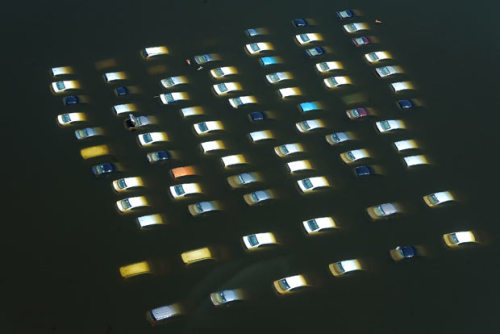
Photo by Christophe Archambault / Getty
Subscribe to:
Posts (Atom)